Buy cityscooter.be ?
We are moving the project
cityscooter.be .
Are you interested in purchasing the domain
cityscooter.be ?
domain@kv-gmbh.de · 0541-91531010
Buy cityscooter.be ?
Why are van der Waals bonds weaker intermolecular interactions than hydrogen bonds?
Van der Waals bonds are weaker intermolecular interactions than hydrogen bonds because they are caused by temporary fluctuations in electron distribution within molecules, resulting in weak attractive forces between molecules. In contrast, hydrogen bonds are a specific type of dipole-dipole interaction that occurs between a hydrogen atom bonded to a highly electronegative atom (such as oxygen or nitrogen) and another electronegative atom. This results in a stronger and more specific interaction compared to the more general and weaker van der Waals forces. Additionally, hydrogen bonds are directional and can form stronger and more stable interactions between molecules compared to van der Waals forces. **
What are Van der Waals bonds?
Van der Waals bonds are weak intermolecular forces that occur between molecules. These bonds are caused by the temporary dipoles that form in molecules due to the uneven distribution of electrons. Van der Waals bonds are responsible for the attraction between molecules and contribute to properties such as boiling and melting points, as well as the physical state of a substance. While they are weaker than covalent or ionic bonds, Van der Waals bonds still play a significant role in determining the behavior of molecules and their interactions with one another. **

Similar search terms for Van der Waals Intermolecular
Top-Angebote
Products related to Van der Waals Intermolecular:
-
BURTON QUICK COMMUTE WMNBURTON QUICK COMMUTE WMNHey rider, here you can find everything you've to know about the BURTON QUICK COMMUTE WMN JACKET. QUICK COMMUTE WMN JACKET BURTON The QUICK COMMUTE WMN is a high quality BURTON WOMAN JACKET. This item has a hot lining, it's perfect for w102,90 €*Shipping: 0,00 €Secure redirect to the provider


-
What is the van der Waals interaction?
Van der Waals interactions are weak attractive forces that exist between molecules. These interactions are caused by fluctuations in electron distribution within molecules, leading to temporary dipoles. The three main types of van der Waals interactions are London dispersion forces, dipole-dipole interactions, and hydrogen bonding. These interactions play a crucial role in determining the physical properties of substances, such as boiling and melting points. **
-
How do Van der Waals forces arise?
Van der Waals forces arise due to the fluctuating electric charges within molecules. These forces are caused by the temporary dipoles that form when the electrons in a molecule are not evenly distributed, creating a temporary imbalance of charge. These temporary dipoles can induce similar dipoles in neighboring molecules, leading to an attractive force between the molecules. Van der Waals forces are responsible for the attraction between non-polar molecules and are weaker than covalent or ionic bonds. **
-
What are Van der Waals forces in chemistry?
Van der Waals forces are weak intermolecular forces that occur between atoms and molecules. These forces are responsible for the attraction and repulsion between molecules, and they play a significant role in determining the physical properties of substances, such as boiling and melting points. Van der Waals forces include dipole-dipole interactions, London dispersion forces, and hydrogen bonding. These forces are important in understanding the behavior of gases, liquids, and solids in chemistry. **
-
What are the van der Waals forces in ethane?
In ethane, the van der Waals forces are London dispersion forces. These forces are caused by temporary fluctuations in electron distribution within molecules, leading to temporary dipoles. In ethane, the nonpolar nature of the molecule results in weak London dispersion forces being the predominant van der Waals forces present. These forces are responsible for holding ethane molecules together and are weaker than other types of intermolecular forces like hydrogen bonding. **


What is the Van der Waals equation in chemistry?
The Van der Waals equation is an equation of state in chemistry that accounts for the non-ideal behavior of gases. It is an improvement over the ideal gas law by incorporating corrections for the volume occupied by gas molecules and the attractive forces between them. The equation is expressed as (P + a(n^2/V^2))(V - nb) = nRT, where P is the pressure, V is the volume, n is the number of moles, T is the temperature, a and b are Van der Waals constants, and R is the gas constant. This equation provides a more accurate description of the behavior of real gases under various conditions. **
What are Van der Waals forces and hydrogen bonds?
Van der Waals forces are weak intermolecular forces that exist between atoms and molecules due to temporary fluctuations in electron distribution. These forces include London dispersion forces, dipole-dipole interactions, and hydrogen bonding. Hydrogen bonds are a specific type of intermolecular force that occurs when a hydrogen atom is covalently bonded to a highly electronegative atom (such as oxygen, nitrogen, or fluorine) and forms an electrostatic interaction with another electronegative atom. Hydrogen bonds are stronger than typical Van der Waals forces and play a crucial role in the structure and properties of many biological molecules, such as DNA and proteins. **
Top-Angebote
Products related to Van der Waals Intermolecular:
-
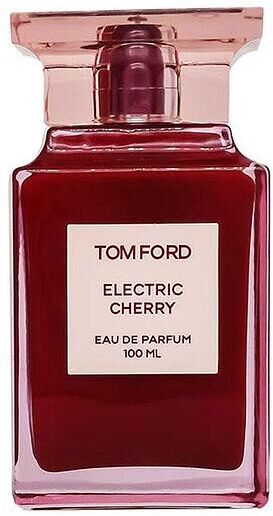
Electric Cherry van TOM FORD Uniseks Eau de Parfum 100mlElectric Cherry van Tom Ford is een bloemig-fruitige geur voor vrouwen en mannen. Dit is een nieuwe geur. Electric Cherry werd gelanceerd in 2023. Topnoten zijn kers en gember; hartnoot is jasmijn sambac; basisnoten zijn ambretolide, roze peper en muskus.205,00 €*Shipping: 0,00 €Secure redirect to the provider
-
Why are van der Waals bonds weaker intermolecular interactions than hydrogen bonds?
Van der Waals bonds are weaker intermolecular interactions than hydrogen bonds because they are caused by temporary fluctuations in electron distribution within molecules, resulting in weak attractive forces between molecules. In contrast, hydrogen bonds are a specific type of dipole-dipole interaction that occurs between a hydrogen atom bonded to a highly electronegative atom (such as oxygen or nitrogen) and another electronegative atom. This results in a stronger and more specific interaction compared to the more general and weaker van der Waals forces. Additionally, hydrogen bonds are directional and can form stronger and more stable interactions between molecules compared to van der Waals forces. **
-
What are Van der Waals bonds?
Van der Waals bonds are weak intermolecular forces that occur between molecules. These bonds are caused by the temporary dipoles that form in molecules due to the uneven distribution of electrons. Van der Waals bonds are responsible for the attraction between molecules and contribute to properties such as boiling and melting points, as well as the physical state of a substance. While they are weaker than covalent or ionic bonds, Van der Waals bonds still play a significant role in determining the behavior of molecules and their interactions with one another. **
-
What is the van der Waals interaction?
Van der Waals interactions are weak attractive forces that exist between molecules. These interactions are caused by fluctuations in electron distribution within molecules, leading to temporary dipoles. The three main types of van der Waals interactions are London dispersion forces, dipole-dipole interactions, and hydrogen bonding. These interactions play a crucial role in determining the physical properties of substances, such as boiling and melting points. **
-
How do Van der Waals forces arise?
Van der Waals forces arise due to the fluctuating electric charges within molecules. These forces are caused by the temporary dipoles that form when the electrons in a molecule are not evenly distributed, creating a temporary imbalance of charge. These temporary dipoles can induce similar dipoles in neighboring molecules, leading to an attractive force between the molecules. Van der Waals forces are responsible for the attraction between non-polar molecules and are weaker than covalent or ionic bonds. **
Similar search terms for Van der Waals Intermolecular
-
BURTON QUICK COMMUTE WMNBURTON QUICK COMMUTE WMNHey rider, here you can find everything you've to know about the BURTON QUICK COMMUTE WMN JACKET. QUICK COMMUTE WMN JACKET BURTON The QUICK COMMUTE WMN is a high quality BURTON WOMAN JACKET. This item has a hot lining, it's perfect for w102,90 €*Shipping: 0,00 €Secure redirect to the provider
-
Opera van Xerjoff Uniseks Eau de Parfum 100mlOpera van Xerjoff is een Woody Floral Musk-geur voor dames en heren. Opera werd gelanceerd in 2019. De neus achter deze geur is Chris Morris. Topnoten zijn fruit en Turkse roos; hartnoten zijn ylang-ylang, nootmuskaat, leer en amber; basisnoten zijn vanille, patchouli, musk, Virginia-ceder en Haïtiaanse vetiver.185,00 €*Shipping: 0,00 €Secure redirect to the provider
-
Jihan van Kajal Uniseks Eau de Parfum 100mlJihan van Kajal is een houtachtige kruidige geur voor dames en heren. Jihan werd gelanceerd in 2018. Topnoten zijn saffraan en appelbloesem; hartnoten zijn roos, kruidnagel en magnolia; basisnoten zijn agarhout (oud), vanille, patchouli, sandelhout en muskus.115,00 €*Shipping: 0,00 €Secure redirect to the provider
-
What are Van der Waals forces in chemistry?
Van der Waals forces are weak intermolecular forces that occur between atoms and molecules. These forces are responsible for the attraction and repulsion between molecules, and they play a significant role in determining the physical properties of substances, such as boiling and melting points. Van der Waals forces include dipole-dipole interactions, London dispersion forces, and hydrogen bonding. These forces are important in understanding the behavior of gases, liquids, and solids in chemistry. **
-
What are the van der Waals forces in ethane?
In ethane, the van der Waals forces are London dispersion forces. These forces are caused by temporary fluctuations in electron distribution within molecules, leading to temporary dipoles. In ethane, the nonpolar nature of the molecule results in weak London dispersion forces being the predominant van der Waals forces present. These forces are responsible for holding ethane molecules together and are weaker than other types of intermolecular forces like hydrogen bonding. **
-
What is the Van der Waals equation in chemistry?
The Van der Waals equation is an equation of state in chemistry that accounts for the non-ideal behavior of gases. It is an improvement over the ideal gas law by incorporating corrections for the volume occupied by gas molecules and the attractive forces between them. The equation is expressed as (P + a(n^2/V^2))(V - nb) = nRT, where P is the pressure, V is the volume, n is the number of moles, T is the temperature, a and b are Van der Waals constants, and R is the gas constant. This equation provides a more accurate description of the behavior of real gases under various conditions. **
-
What are Van der Waals forces and hydrogen bonds?
Van der Waals forces are weak intermolecular forces that exist between atoms and molecules due to temporary fluctuations in electron distribution. These forces include London dispersion forces, dipole-dipole interactions, and hydrogen bonding. Hydrogen bonds are a specific type of intermolecular force that occurs when a hydrogen atom is covalently bonded to a highly electronegative atom (such as oxygen, nitrogen, or fluorine) and forms an electrostatic interaction with another electronegative atom. Hydrogen bonds are stronger than typical Van der Waals forces and play a crucial role in the structure and properties of many biological molecules, such as DNA and proteins. **
* All prices are inclusive of VAT and, if applicable, plus shipping costs. The offer information is based on the details provided by the respective shop and is updated through automated processes. Real-time updates do not occur, so deviations can occur in individual cases. ** Note: Parts of this content were created by AI.